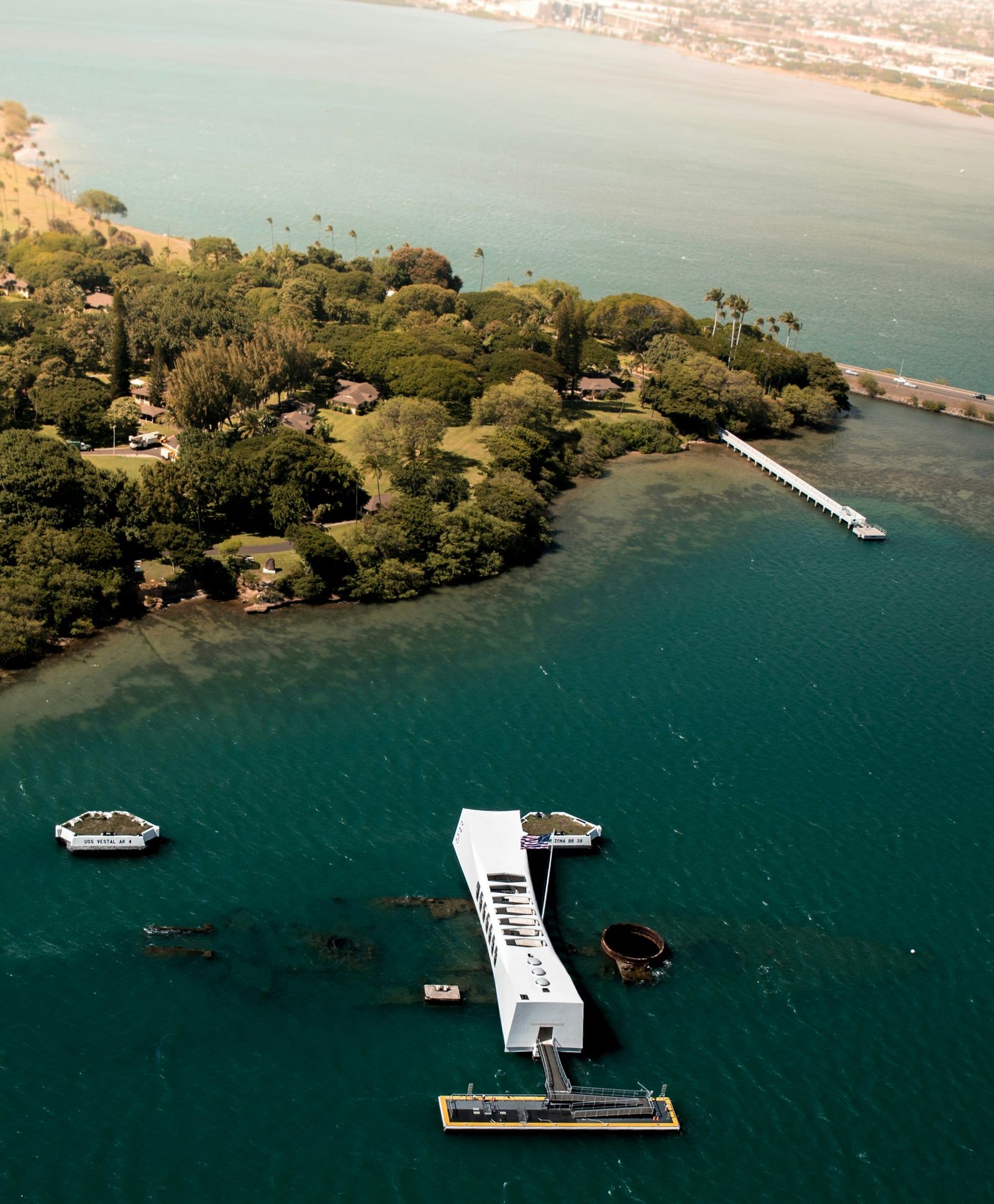
Pearl Harbor occupies 10,000 acres of land and 10 square miles of water on the southern coast of Oʻahu, six miles west of Honolulu. The active United States Navy base also functions as a national memorial honoring the 2,403 Americans killed during the December 7, 1941 attack.
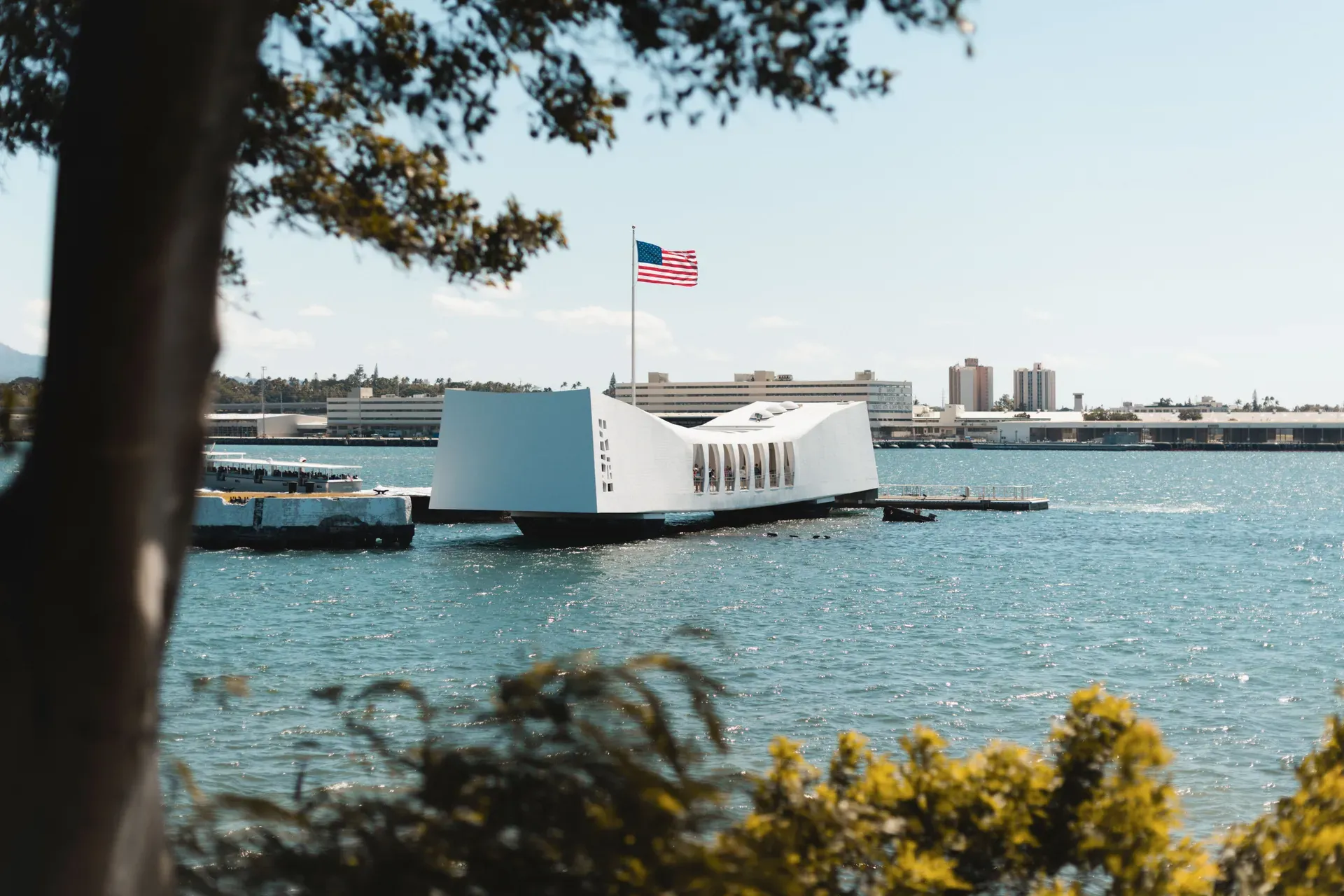
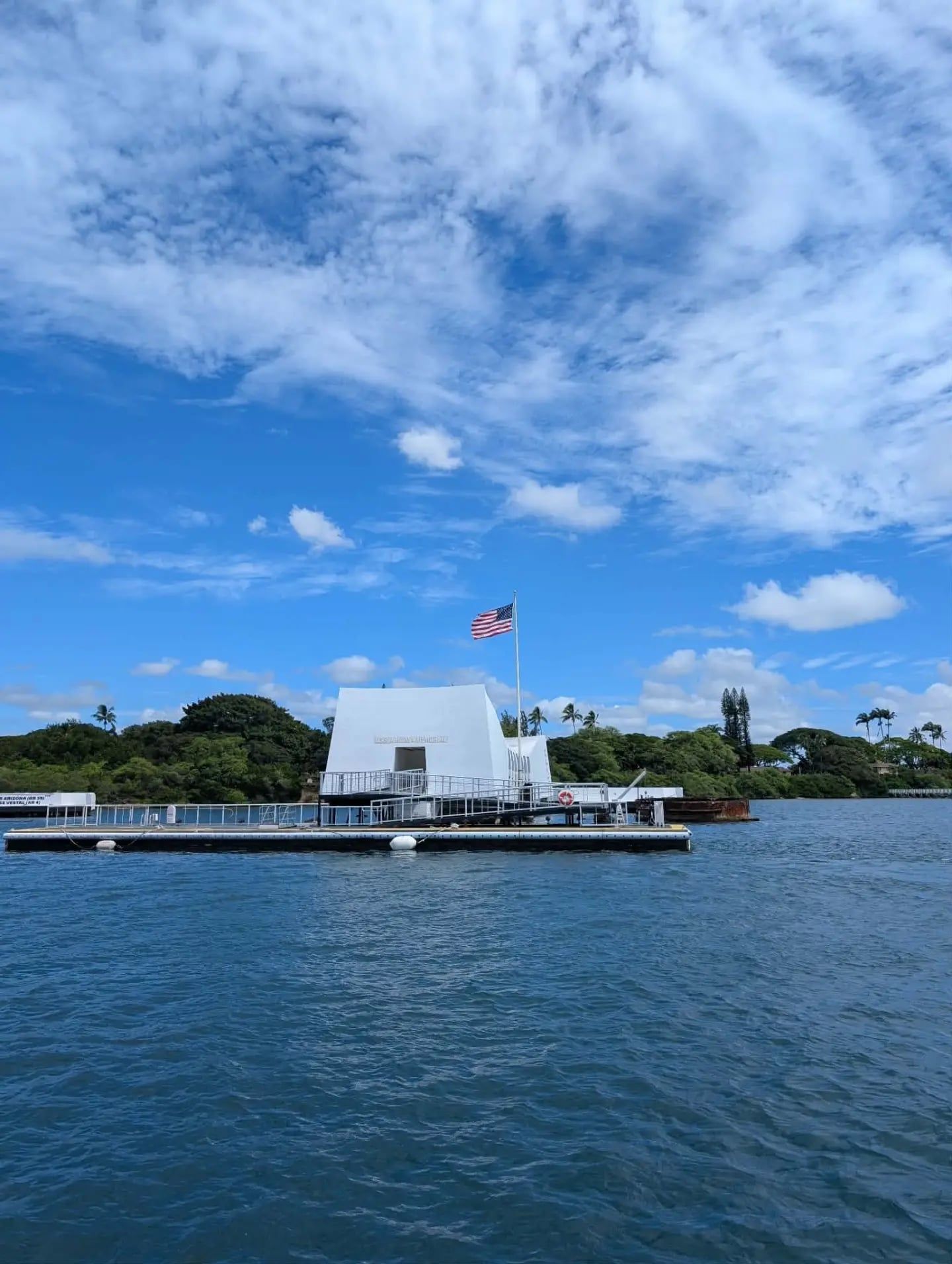
Ten square miles of navigable water form a cloverleaf-shaped lagoon on the southern coast of Oʻahu, exactly six miles west of Honolulu. Pearl Harbor functions simultaneously as the headquarters of the United States Pacific Fleet and a solemn national cemetery. The site encompasses the Pearl Harbor National Memorial, a historic destination featuring museums, exhibits, and monuments dedicated to World War II. Visitors board a U.S. Navy-operated shuttle boat to reach the USS Arizona Memorial, a white structure suspended directly over the sunken battleship hull. Looking down into the blue-green water reveals the rusted remains of the ship where 1,177 crewmen lost their lives.
The destination requires careful logistical planning. General admission to the visitor center and museums costs nothing, but booking a ticket for the USS Arizona Memorial program through Recreation.gov incurs a $1.00 non-refundable reservation fee. Paid parking at the Visitor Center runs $7.00 per day. Exploring beyond the free zones requires purchasing individual tickets or a Passport to Pearl Harbor for $99.99. The Pacific Fleet Submarine Museum costs $25.99 for adults, the Battleship Missouri Memorial charges $39.99, and the Pearl Harbor Aviation Museum requires a $29.99 entry fee. A short visit to the Visitor Center and the USS Arizona Memorial takes two to three hours, while a full experience covering all four historic sites demands six to eight hours.
Visitors can take TheBus route 20 or route 42 from Downtown Honolulu directly to the Arizona Memorial stop for $3.00, though the ride takes 45 minutes. Taxis and rideshares offer a 20-minute direct route for $35.00 to $45.00. Driving from Waikiki requires taking the H-1 West highway to Exit 15A, carefully following signs to avoid accidentally entering the Hickam military base. Winter months bring unpredictable tropical weather and sudden Hawaiian rain showers that cause the park to close early for public safety. High winds during these stormy periods frequently halt the Navy passenger boats from docking at the USS Arizona Memorial, limiting visitors to shore-side views. Travelers should check the official site that morning before driving from Waikiki. Arriving without a pocketed jacket means carrying your phone and wallet by hand, as security regulations strictly prohibit bags larger than 1.25 by 2.25 by 5.5 inches from entering the gates.
Hawaiian tradition credits Chief Keaunui with cutting a navigable channel into the estuary originally known as Puʻuloa. The submerged river valleys formed approximately 13,000 years ago during the last glacial period before rising sea levels drowned the confluence. Native Hawaiians harvested the abundant marine life and named the area Wai Momi, meaning Waters of Pearl. The natural drainage for several streams flowing from the Waianae Range on the west and the Koʻolau Range on the east created a thriving ecosystem long before military intervention.
The United States and the Hawaiian Kingdom signed the Reciprocity Treaty in 1875, fundamentally altering the harbor's trajectory. By 1887, the U.S. secured exclusive rights to maintain a coaling and repair station on the shores. The Spanish-American War of 1898 solidified the strategic value of a Pacific base, prompting the federal government to expand its footprint. Congress authorized a formal naval station after 1908, and engineers completed the first massive drydock in 1919. The military dredged the shallow channels, transforming the natural estuary into a deep-water basin capable of housing the Pacific Fleet.
The Imperial Japanese Navy launched a surprise military strike on the morning of December 7, 1941. The assault permanently altered global power dynamics by ending United States isolationism and precipitating its entry into World War II. Casualties from the attack totaled 2,403 Americans, while Japanese forces lost 64 men. Destruction of the USS Arizona accounted for nearly half of the American deaths that day, with 1,177 crewmen killed aboard the single vessel. The ruined hull remains exactly where it sank, operating as a permanent underwater tomb for the sailors trapped inside. In the immediate aftermath, the U.S. government ordered the internment of approximately 120,000 individuals of Japanese descent, reshaping the social fabric of the nation. The global conflict initiated that morning officially concluded on September 2, 1945, when the Japanese Instrument of Surrender was signed on the decks of the Battleship Missouri.
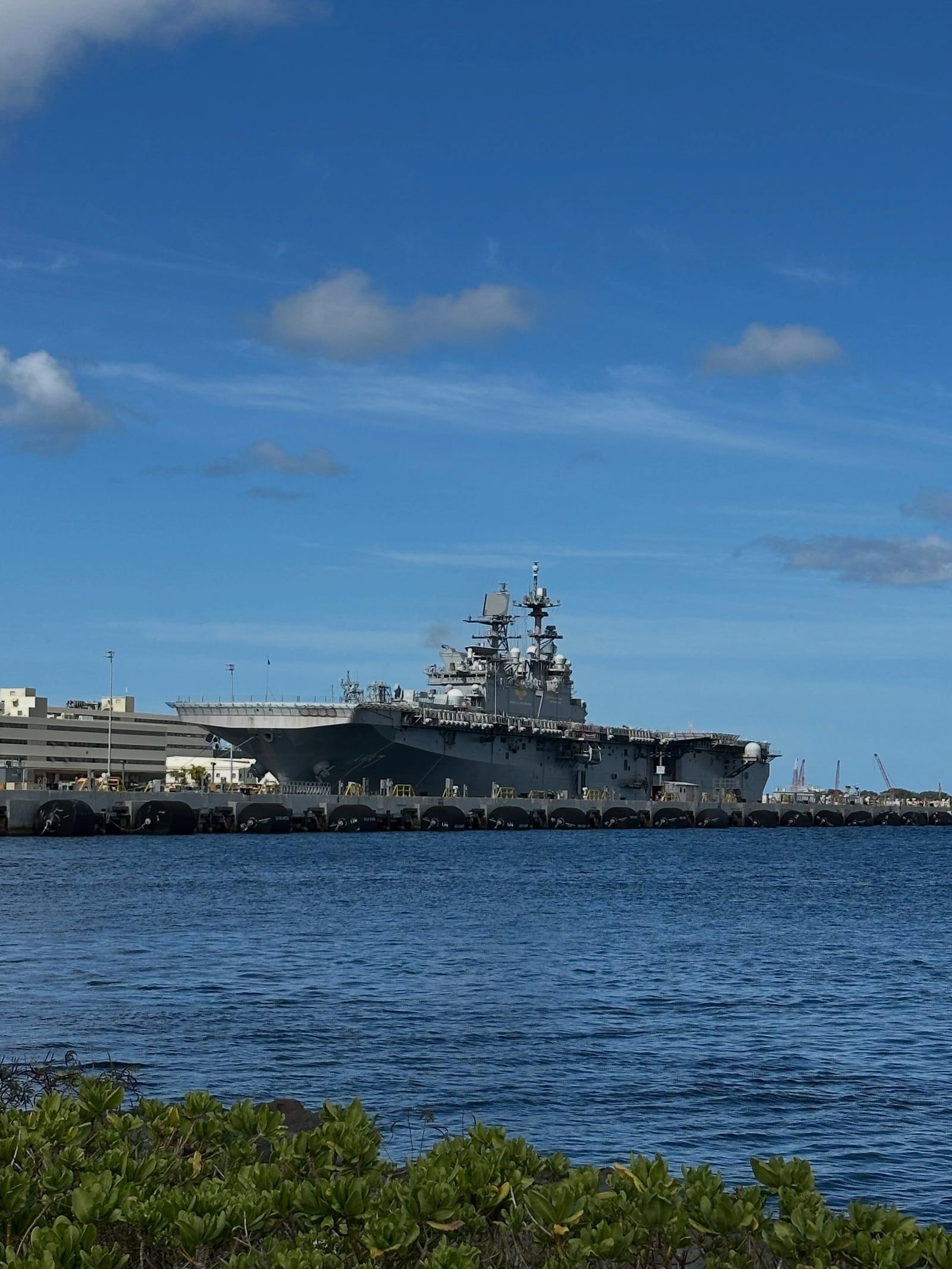
Today, much of the harbor and its surrounding lands function as an active United States Navy deep-water naval base. Ford Island sits directly in the center of the harbor, connected to Oahu by the Admiral Clarey Bridge. Visitors driving to Ford Island require official security clearance for drivers, passengers, and vehicles. Independent travelers without military identification must use authorized tour buses or the free Ford Island shuttle to access the aviation and battleship museums.
Pearl Harbor covers a total land area of more than 10,000 acres and features hundreds of anchorages across its deep-water basin. The physical harbor is a submerged confluence of several river valleys that drain directly into Mamala Bay. Ford Island occupies the center of the water, operating as both an active military installation and a historical repository. The Admiral Clarey Bridge connects the island to the main highway system, though photography is strictly banned while traveling across the span due to military security protocols.
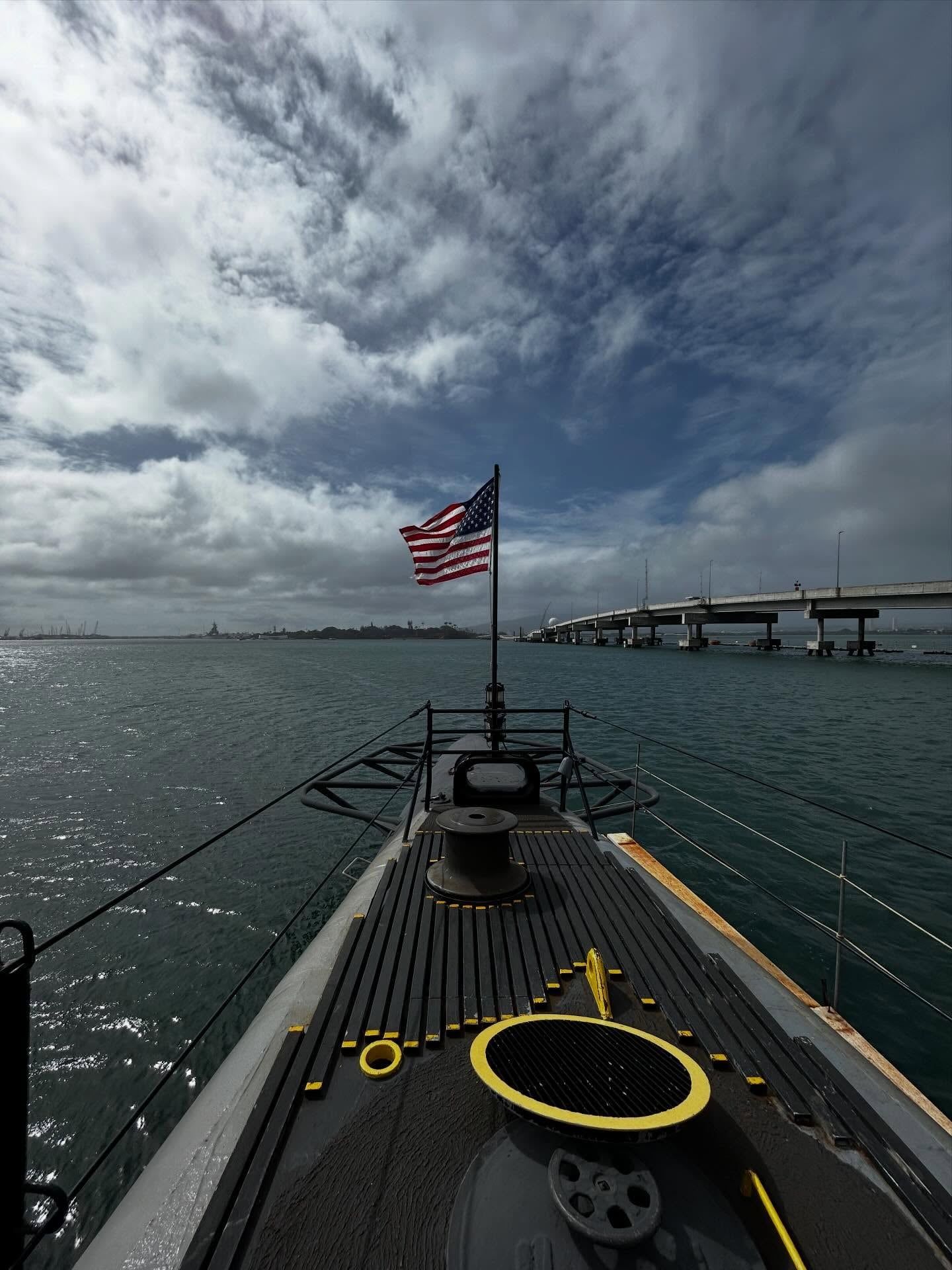
Walking the polished wooden decks of the Battleship Missouri allows visitors to stand on the exact spot where World War II officially concluded. The massive vessel provides a physical bookend to the war, contrasting sharply with the sunken ruins of the USS Arizona just across the water. At the adjacent Pacific Fleet Submarine Museum, guests can physically descend into the USS Bowfin. Squeezing through the tight, metallic corridors and viewing the compact crew quarters offers a tactile understanding of life inside a World War II submarine that completed nine historic war patrols.
The Pearl Harbor Aviation Museum occupies authentic, battle-scarred hangars on Ford Island. The facility showcases over 50 historic aircraft inside structures that survived the 1941 attack. Visitors can still see actual bullet holes in the glass windows of Hangar 79, providing a tangible connection to the surprise air assault. Certain scenic points on the aviation tower's observation deck restrict photography to protect active military operations visible below.
The Waterfront Interpretive Trail runs along the flat, harbor-edge paths of the Pearl Harbor National Memorial. Strolling this route offers clear views of the quiet waters and Ford Island. Outdoor exhibits and viewpoints provide historical context, allowing visitors to look out across the harbor and visualize the events of December 7. Virtual Reality tours offer another layer of detail for those unable to access all physical sites. Individual VR experiences range from $6.99 to $10.99, while an unlimited package costs $29.99 for adults. These digital exhibits recreate the decks of the USS Arizona before the attack and allow visitors to virtually witness the events of December 7 from multiple perspectives across the harbor.
Native Hawaiians originally revered the harbor as Wai Momi, valuing the waters for their natural abundance and deep spiritual connection. The massive estuary provided both sustenance and the pearls that eventually gave the harbor its English name. Extensive military dredging ultimately transformed the physical landscape, severing the immediate visual link to the area's original namesake. The shift from a quiet, sacred waterway into a heavily fortified military installation represents a massive change in the cultural geography of Oʻahu.
The site now stands as a place of international remembrance and a solemn national cemetery. The Remembrance Circle, located outdoors near the visitor center, honors the military and civilian men, women, and children who died during the attack. Visitors read personal stories and view the names of extraordinary individuals awarded the Medal of Honor, highlighted in gold lettering. The USS Oklahoma Memorial on Ford Island features white marble standards representing each of the 429 crew members who died when their ship capsized, providing another quiet space for reflection.
Maintaining the solemn atmosphere requires strict adherence to military and memorial protocols. There is no official dress code, but visitors must dress respectfully, avoiding swimwear, overly revealing attire, and profanity-laced shirts. Uniformed military personnel face even stricter regulations. Active-duty members must wear Class 'B' dress or better to board the shuttle to the USS Arizona, and battle dress uniforms are strictly prohibited on the memorial itself. Parents bringing children must maintain a quiet, respectful environment and are barred from bringing strollers onto the Navy vessels or the memorial structure. The attack triggered deep-seated paranoia, leading to the unjust internment of 120,000 people of Japanese descent. Today, Pearl Harbor functions as a site of reconciliation. Japanese and American leaders frequently meet at the memorials to honor the dead from both nations, transforming a site of devastating conflict into a symbol of enduring alliance.
A limited batch of last-minute USS Arizona tickets is released online at exactly 3:00 PM HST the day before.
Rollators are the leading cause of traumatic injuries at the memorial when used incorrectly as wheelchairs.
The park waives the standard $7.00 parking fee on major holidays like Independence Day.
The visitor center remains open every day of the year except Thanksgiving, Christmas, and New Year's Day.
Walk-up visitors without tickets can register for standby boat seats virtually using their cell phones.
Security allows parents to bring clear, sealable plastic bags for diapering essentials if stored under a stroller.
The memorial theater is kept heavily air-conditioned, prompting many visitors to bring light jackets for the 23-minute documentary.
Entry to the Pearl Harbor National Memorial, visitor center, and grounds is free. Booking a ticket for the USS Arizona Memorial boat ride requires a $1.00 non-refundable reservation fee on Recreation.gov.
Pearl Harbor enforces a strict no-bag policy. Purses, backpacks, diaper bags, and camera bags are prohibited, though clear bags smaller than 1.25 by 2.25 by 5.5 inches are allowed. A baggage storage facility is available on-site for $7.00 to $10.00 per bag.
Tickets must be reserved online through Recreation.gov. The primary batch of tickets is released exactly eight weeks in advance, while a smaller batch becomes available at 3:00 PM HST the day before your visit.
Parking at the Pearl Harbor Visitor Center costs $7.00 per day. Payments must be made via a mobile app or credit card upon arrival.
A basic visit to the Visitor Center and the USS Arizona Memorial takes two to three hours. Exploring all four historic sites, including the Battleship Missouri and the Aviation Museum, requires six to eight hours.
The visitor center, museums, Navy transit boats, and the USS Arizona Memorial are fully wheelchair accessible with flat paths. The park does not rent wheelchairs, so visitors must bring their own.
Strollers are permitted on the visitor center grounds but are banned from the Navy transit boats and the memorial itself. Parents must bring a baby carrier for the boat-bound portions of the tour.
Visitors must dress respectfully, meaning swimwear and profanity-laced clothing are prohibited. Active-duty military personnel cannot wear battle dress uniforms on the USS Arizona Memorial and must wear Class 'B' dress or better.
Standard handheld cameras are permitted throughout most of the park. Photography is strictly banned while traveling on the Admiral Clarey Bridge to Ford Island due to active military security protocols.
Walk-up visitors can access the visitor center, museums, and harbor-edge views for free. Accessing the Navy transit boat requires registering virtually on standby using a cell phone at the standby desk.
Browse verified tours with free cancellation and instant confirmation.
Find Tours